When you click the link, it will take you to the corresponding page.
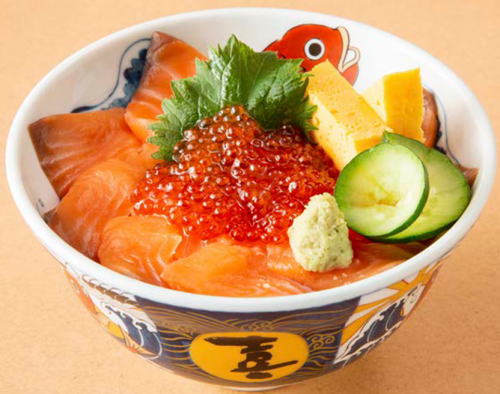
サーモン筋子丼
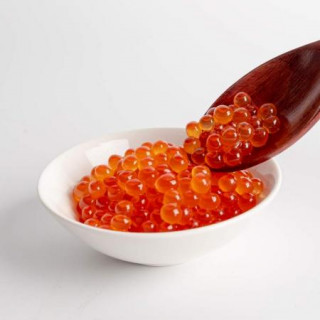
In Japan, salmon roe, which is highly popular as a topping for Gunkan sushi or rice bowls, is referred to as 'ikura' (いくら) or 'sujiko' (筋子) in Japanese. 'Sujiko' indicates a clustered state where a membrane connects the eggs. At the same time 'ikura' refers to the separated state where the membrane has been removed, resulting in individual beads of salmon roe commonly placed on sushi or rice bowls. When the eggs are scattered individually, they are also called 'barako' (ばら子), derived from the term 'barabara' (バラバラ), meaning scattered or dispersed. The origin of 'ikura' comes from the Russian word 'икра' (ikra), which means fish roe. However, in Japanese, 'ikura' refers explicitly to roe from the salmon family, while in Russian, 'икра' is a general term encompassing roe from various fish species, including salmon. The method of consuming salmon roe without heating but marinating it, also originated in Russia. Initially, it started with a salt curing method, but marinating in sweet soy sauce has recently become more prevalent.
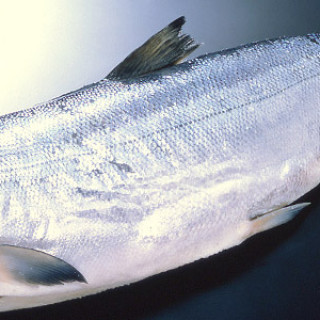
In Japanese, there are three main words to refer to "salmon": "sake" (さけ, sake), "shake" (しゃけ, shake), and "sakemon" (さけもん, sakemon). "Sake" is the standard term and refers to the white salmon, which is a type of salmon. Due to the risk of parasite infection in wild salmon, "sake" is usually used for cooked dishes rather than raw consumption. It belongs to the Salmonidae family of saltwater fish. "Shake" is a variation in the pronunciation of "sake" and is equally common as the standard name. "Sakemon" is the Japanese pronunciation of "salmon" and is typically used to refer to the salmon trout, a freshwater fish in the Salmonidae family. This species is often mass-cultivated and can be bred using artificial feed, eliminating the risk of parasite infection. In summary, "sake" (shake) refers to salmon used for cooked dishes, while "sakemon" (salmon) refers to salmon used for sashimi or sushi. In Japan, depending on the fishing season, "sake" may be referred to by various names. Salmon hatched in Japanese rivers migrate and live in the North Pacific and other sea areas for several years before returning to the rivers to spawn. Salmon caught along the coast of Hokkaido on their way back are called "Akizake" (あきざけ, autumn salmon) because it is the autumn season. Additionally, there are cases where salmon mistakenly enter the coastal waters of Hokkaido in spring to early summer when they are not returning to Japan. They are called "Tokishirazu" (ときしらず, unaware of time) and are known for their fatty flesh and delicious taste as they have not reached the spawning period.